



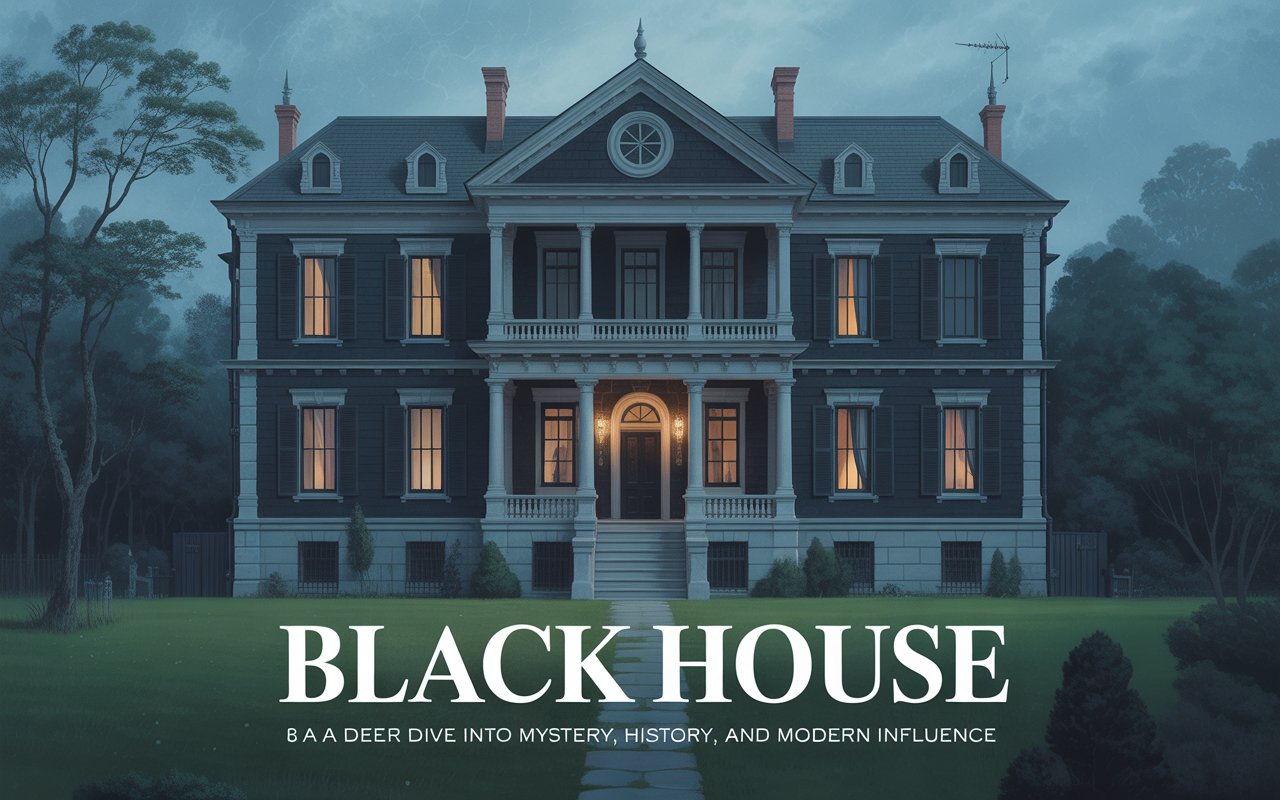
Black House: A Deep Dive into Mystery, History, and Modern Influence
When you hear the term “Black House,” what comes to mind? For some, it conjures eerie images of haunted mansions cloaked in shadows. For others, it suggests modern architecture—sleek, minimalist homes painted in bold black finishes. And for history buffs, the phrase recalls a web of symbolism, cultural significance, and even politics.
In this article, we’ll explore the many layers of the Black House—its cultural, architectural, historical, and symbolic meanings. Whether you’re fascinated by ghost stories, intrigued by cutting-edge design, or simply curious about how a name can carry so much weight, you’ll find plenty to uncover here.
What Does “Black House” Really Mean?
At its simplest, a black house can be either literal or metaphorical. On the literal side, it may refer to a home painted black, or a traditional building style found in certain regions. On the symbolic side, the phrase has been tied to mystery, rebellion, or even power structures in different cultures.
Think of it like a word with multiple meanings depending on the lens you’re using. Just as “greenhouse” can be both a place to grow plants and a metaphor for sustainability, the Black House wears many masks.
The Origins of the Term “Black House”
The phrase didn’t emerge overnight. Historically, “black house” has been used in several contexts:
-
Scottish Blackhouses: In Scotland, particularly the Highlands and Hebrides, a blackhouse was a type of traditional dwelling made of stone walls and thatched roofs. They were often smoky inside due to peat fires, giving the interiors a dark, soot-covered look—hence the name.
-
Cultural Associations: In folklore and gothic literature, black houses often symbolize mystery, secrecy, or danger.
-
Political References: Just as the “White House” represents leadership in the U.S., “Black House” has been used as a counter-symbol in literature and political commentary.
The Scottish Blackhouse: A Glimpse Into the Past
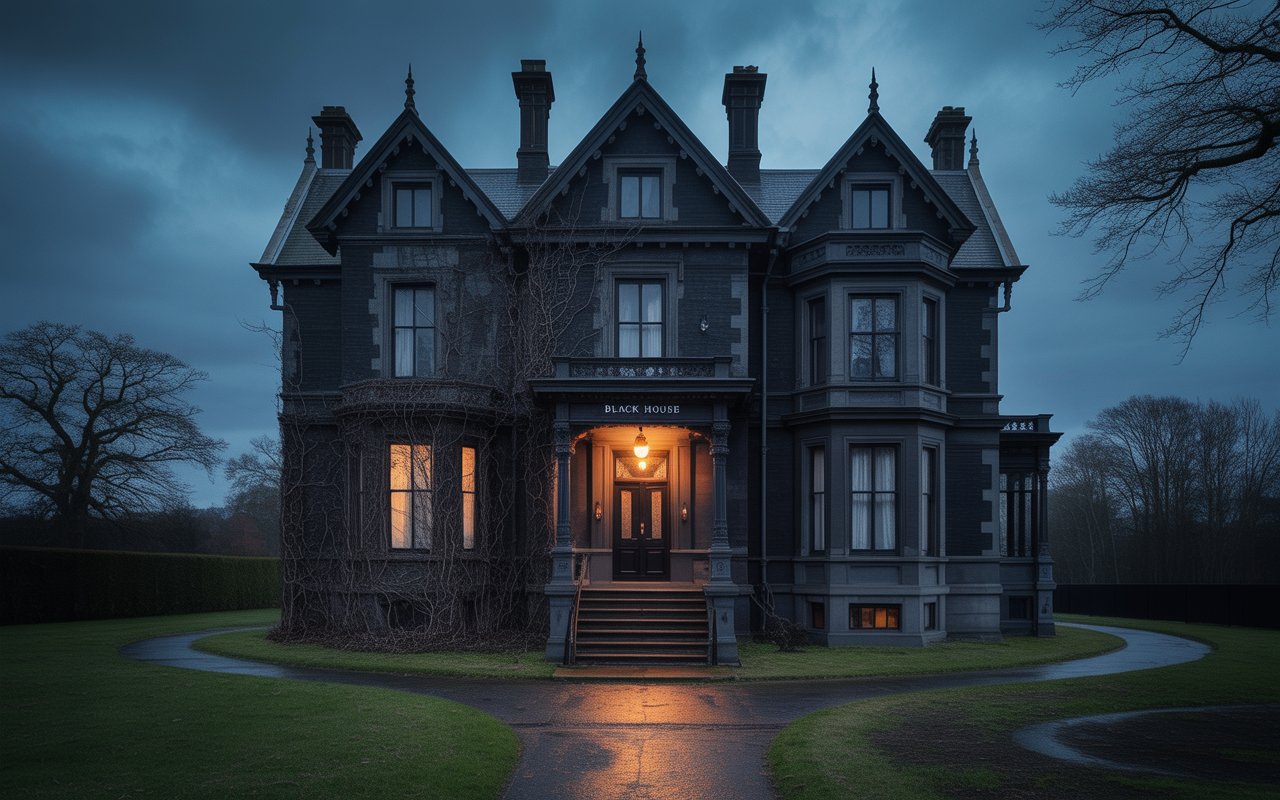
One of the most fascinating real-world examples of a black house is the traditional Scottish blackhouse. Built mainly in the 18th and 19th centuries, these dwellings were common in the Hebrides and other rural parts of Scotland.
-
Design and Structure: Made with thick stone walls, thatched roofs, and compact layouts, they were designed to withstand harsh weather.
-
Living Conditions: Families and livestock often shared the same space, separated by partitions. The smoke from peat fires escaped through the thatch, blackening the interiors.
-
Legacy: Today, some preserved blackhouses have become museums, giving visitors a peek into Scotland’s rustic past.
Visiting one feels almost like stepping into a time capsule—a reminder of human resilience in tough environments.
Black House in Architecture Today
Fast forward to the present, and the phrase takes on an entirely different meaning. Modern architects have embraced the all-black aesthetic, creating striking homes that stand out against natural landscapes.
-
Minimalist Style: Black exteriors highlight simplicity and clean lines, often paired with large glass windows.
-
Contrast with Nature: In wooded or snowy settings, black houses create a dramatic contrast, almost blending into shadows.
-
Sustainability: Some designers argue that dark exteriors absorb heat, reducing energy costs in colder climates.
Imagine walking through a neighborhood of pastel houses, then spotting a jet-black home at the corner. It immediately captures your attention—like a bold ink mark on a white page.
The Symbolism of Black
Why black? The color has always carried weighty symbolism:
-
Mystery and Secrecy: A black house can represent something hidden, perhaps even forbidden.
-
Elegance and Sophistication: Just as a black dress is timeless, a black-painted home radiates bold confidence.
-
Rebellion: Painting a house black can be seen as breaking away from tradition, challenging the norm of whites, beiges, and pastels.
It’s a reminder that colors aren’t just aesthetic choices—they’re cultural statements.
Haunted Black Houses in Folklore and Fiction
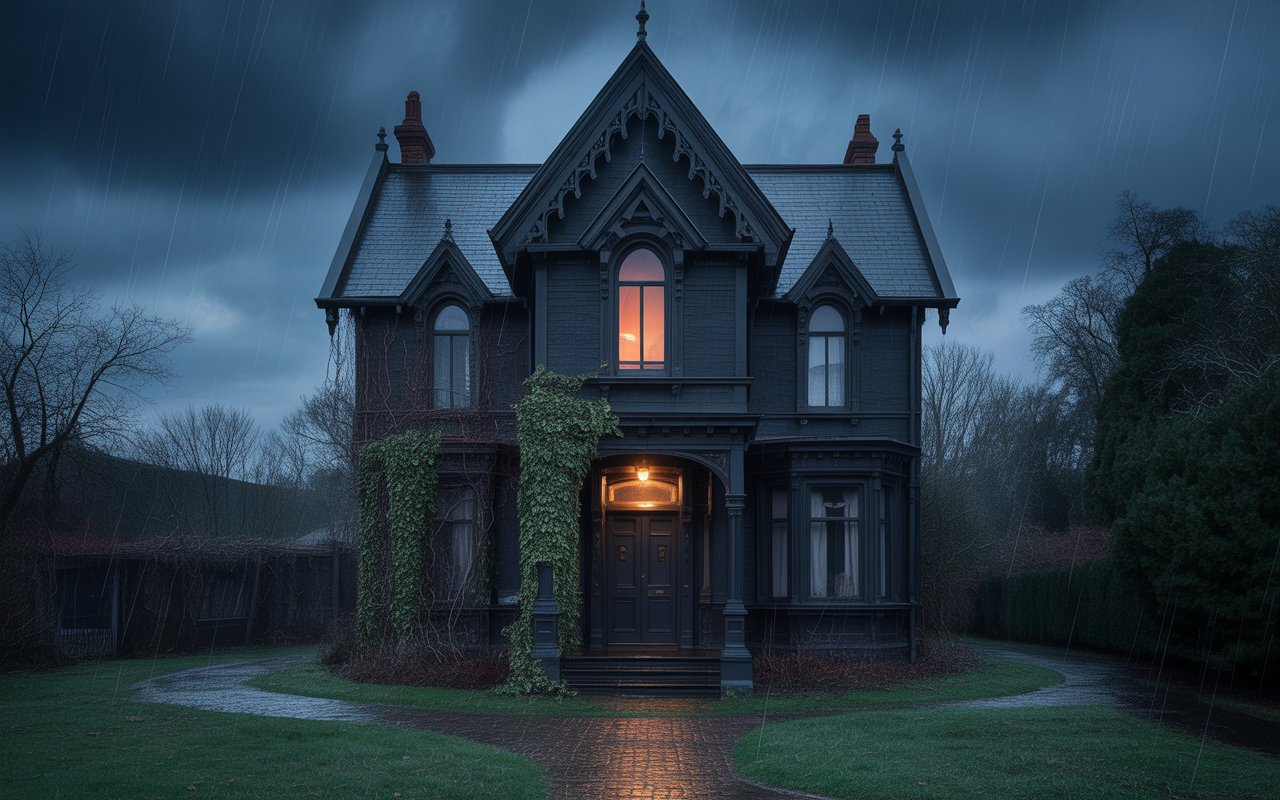
You’ve probably noticed that in horror stories, haunted houses are often described as dark, looming, and mysterious. The “black house” trope has found its way into literature and film.
-
Stephen King and Peter Straub’s Novel Black House: This fantasy-horror novel is a sequel to The Talisman, weaving supernatural elements around a sinister house.
-
Classic Gothic Tales: In gothic fiction, black houses often symbolize decay, secrecy, or danger lurking inside.
-
Urban Legends: Many towns have their own version of a “black house” legend—a spooky home avoided by locals.
This cultural thread shows how the concept has become shorthand for the unknown.
Black House vs. White House: A Symbolic Contrast
It’s hard to talk about “black house” without its symbolic opposite—the White House. While the White House in Washington, D.C., symbolizes authority, leadership, and transparency (at least in theory), the black house has sometimes been portrayed as its foil: secrecy, opposition, or shadow power.
Writers and political commentators occasionally use “black house” as a metaphor for hidden agendas or underground movements, contrasting it with the public image of governance.
It’s a bit like yin and yang—light and dark, visible and hidden.
Pop Culture and the Black House Concept
Beyond literature, black houses have shown up in music, movies, and art:
-
Films: Haunted mansions painted black are staples in horror films.
-
Music Videos: Dark houses often serve as backdrops for themes of mystery, rebellion, or heartbreak.
-
Art Installations: Some contemporary artists have built black houses as symbolic pieces, exploring themes of memory, loss, or modern identity.
Pop culture thrives on symbols, and the black house offers a visually and emotionally powerful one.
The Allure of Owning a Black House
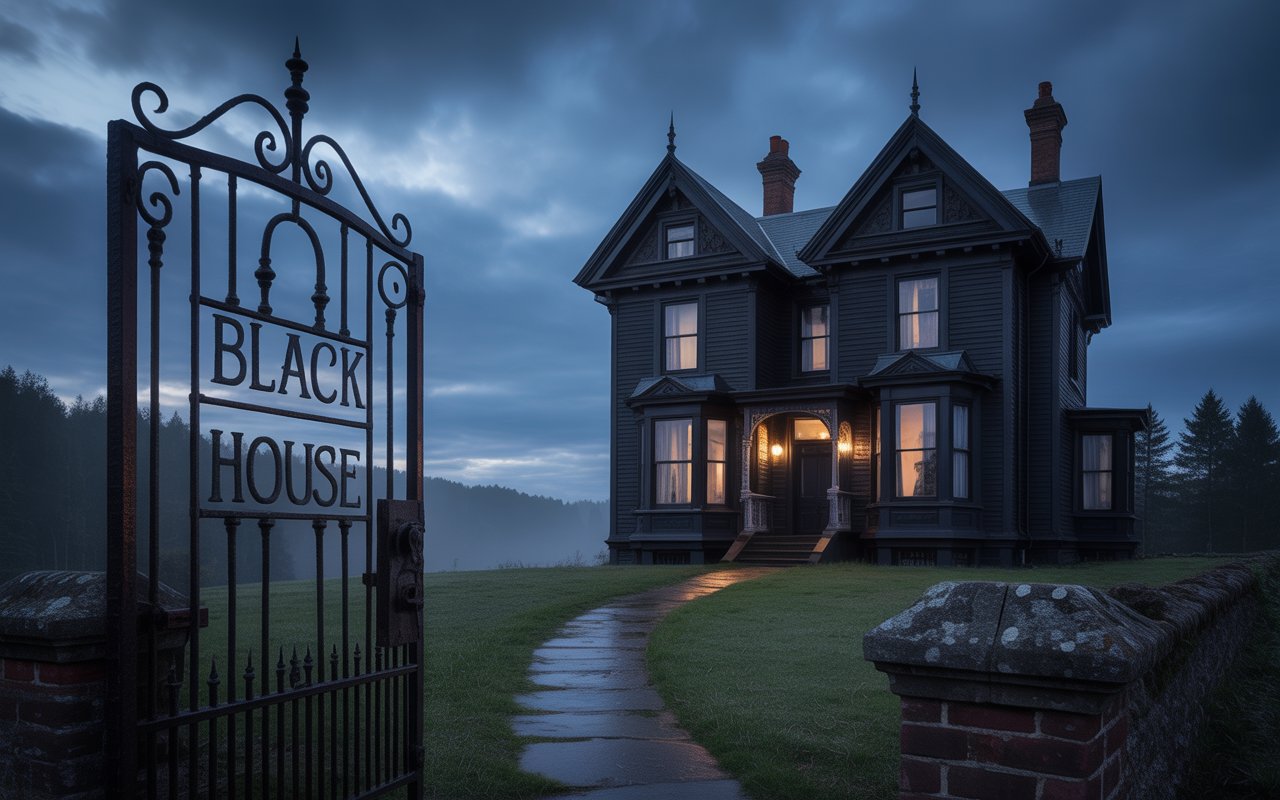
Interestingly, many modern homeowners are now drawn to the idea of living in an actual black house—not a haunted one, but a stylish, sleek home.
-
Aesthetic Choice: For those who love bold statements, a black exterior makes their home stand out.
-
Low Maintenance: Dark colors hide dirt better than lighter shades, though they may show dust in drier areas.
-
Resale Value: Surprisingly, unique architectural styles can boost a home’s appeal among certain buyers.
Owning a black house today doesn’t make you mysterious—it makes you trend-forward.
Controversies Around Black Houses
Of course, not everyone is on board. Some critics argue:
-
Heat Absorption: In hot climates, black-painted houses may worsen cooling costs.
-
Neighborhood Aesthetics: Not all communities welcome starkly contrasting architecture.
-
Symbolic Misinterpretation: Some still view black houses as “creepy” or “unsettling.”
These debates reveal how much meaning we attach to something as simple as color.
Why the Black House Still Fascinates Us
So, what’s the reason this idea holds such lasting fascination? It’s because the Black House is never just a house. It’s a canvas where culture, symbolism, and imagination meet.
-
For historians, it’s a reminder of Scotland’s rural life.
-
For architects, it’s a statement of bold design.
-
For writers and filmmakers, it’s a symbol of fear, secrecy, or rebellion.
-
For everyday people, it’s a mix of curiosity and aesthetic appeal.
Much like a shadow at dusk, the Black House keeps us intrigued—because what we can’t fully define, we can’t stop thinking about.
Conclusion: A House That’s More Than a Color
At the end of the day, the Black House isn’t confined to one definition. It’s part of folklore, part of architecture, part of politics, and part of art. Whether you see it as a traditional Scottish dwelling, a sleek modern home, or a haunted mansion from your favorite story, it carries a weight that ordinary houses don’t.
And maybe that’s the true magic of the Black House—it invites us to look beyond walls and paint, into the layers of meaning we humans love to attach to the things around us.
FAQs About Black House
1. What is a traditional Scottish blackhouse?
A Scottish blackhouse is a stone-and-thatch dwelling found in the Highlands and Hebrides, often with soot-blackened interiors due to peat fires. Families and animals sometimes shared the same space.
2. Why do modern architects build black houses?
Black-painted houses are popular for their minimalist, bold style. They also create striking contrasts with natural landscapes and can be energy-efficient in colder climates.
3. Is a black house considered unlucky?
Culturally, black houses can carry eerie or spooky associations, but many see them as stylish and sophisticated. It largely depends on personal and cultural perspective.
4. What is the connection between black houses and horror stories?
In horror and gothic fiction, black houses often symbolize mystery, decay, or hidden dangers. This trope taps into our natural fear of the unknown.
5. Can painting a house black affect property value?
Yes. While some buyers may be hesitant, others find black houses unique and appealing, potentially increasing property value in the right market.
